Case Studies

Extreme Networks Platform One

Extreme Networks Platform ONE (EP1) represents my approach to design leadership at scale, where systems thinking, platform strategy, and human-centered design converge to simplify complex enterprise software and drive long-term business growth.

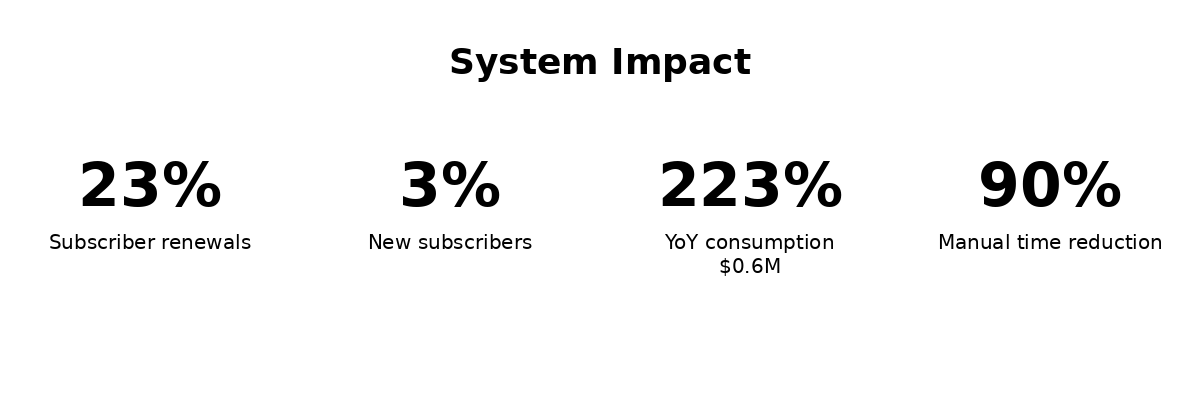
Since launch, the results speak for themselves: a 23% increase in subscriber renewals, 3% growth in new subscribers, 223% YoY consumption growth reaching $0.6M, and a 90% reduction in manual management time, all contributing to the company's $1.1B in annual revenue.

I partnered closely with Product and Engineering to transform a fragmented portfolio into a cohesive, scalable, AI-ready platform. This work is a reflection of how I lead, by building strong cross-functional relationships, working with the team to make design systems that scale, and integrating emerging technologies thoughtfully. From machine learning to generative AI and assisted interaction patterns, every decision was grounded in what makes experiences clear, trustworthy, and genuinely useful to real users.
Problems/Opportunities

Fragmented Enterprise Tools
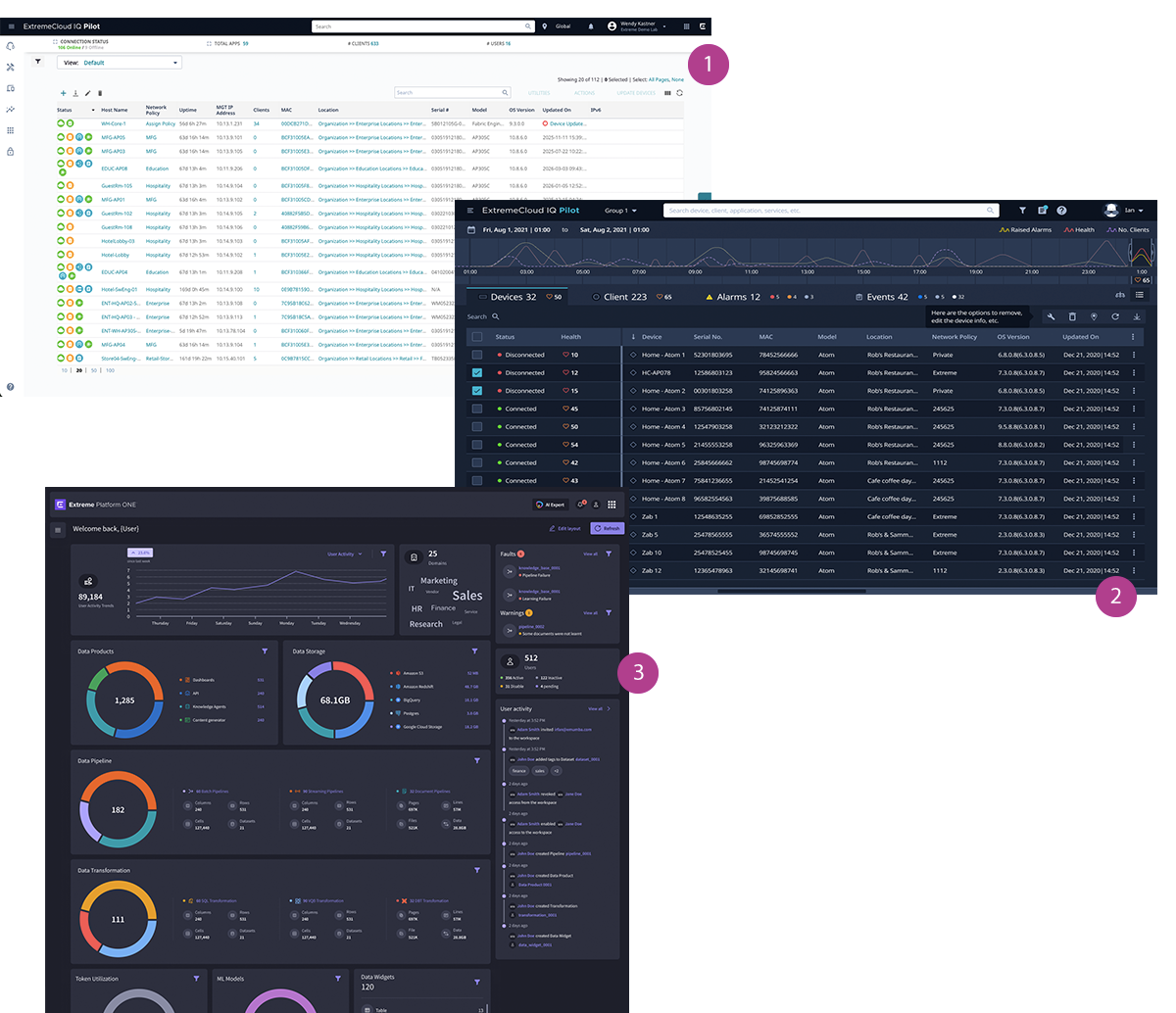
IT teams were managing networks through 12+ disconnected tools, leading to context switching, data silos, and operational inefficiency. Each tool had its own UI paradigms, authentication, and data models.

Complex User Roles
Network admins demanded deep technical control. Distributors sought to scale up sales networks through partner client growth. NOC Engineers relied on real-time monitoring. Partner resellers aimed to optimize ROI with vendors and distributors. Service Providers pursued fast solutions.
View Personas

Scale & Cognitive Load
Enterprise customers managed 10,000+ devices across global sites. The cognitive load of understanding network health, security threats, and performance at this scale was overwhelming existing tools.
View website for more details

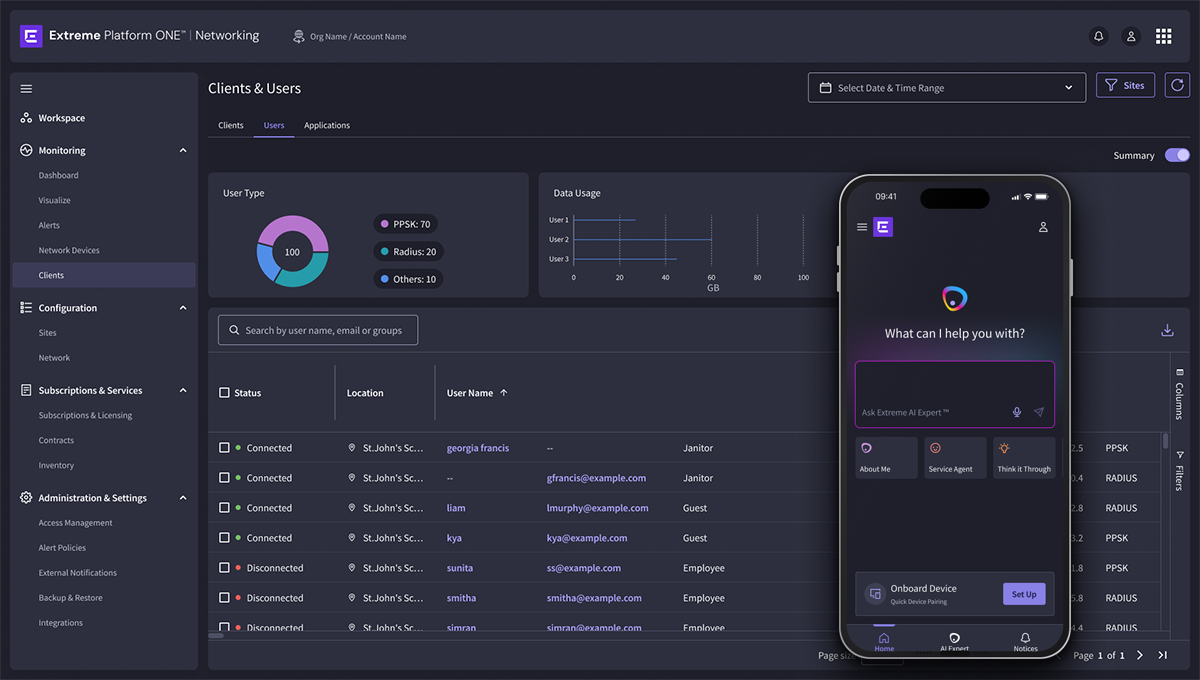
Product Solution Demo (Figma Walkthrough)
Vision & Strategy

Platform Thinking vs. Product Silos
Rather than building another standalone product, we envisioned a platform that could unify existing capabilities while enabling future innovation. This required designing for extensibility, composability, and shared intelligence, which includes:

  • Unified data layer across all services
  • Consistent interaction patterns and information architecture
  • Single authentication and permission model
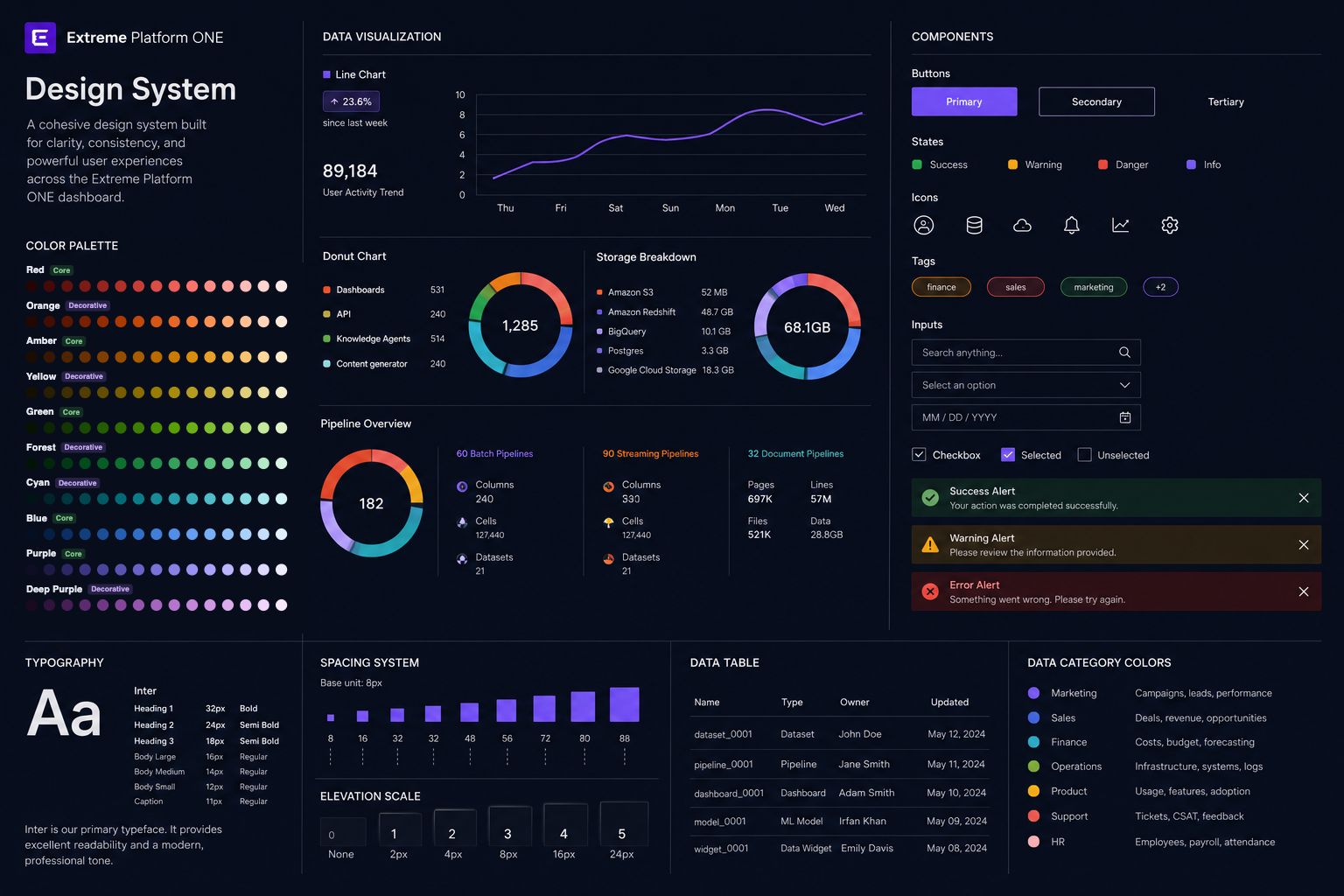
  • Shared component library and design language
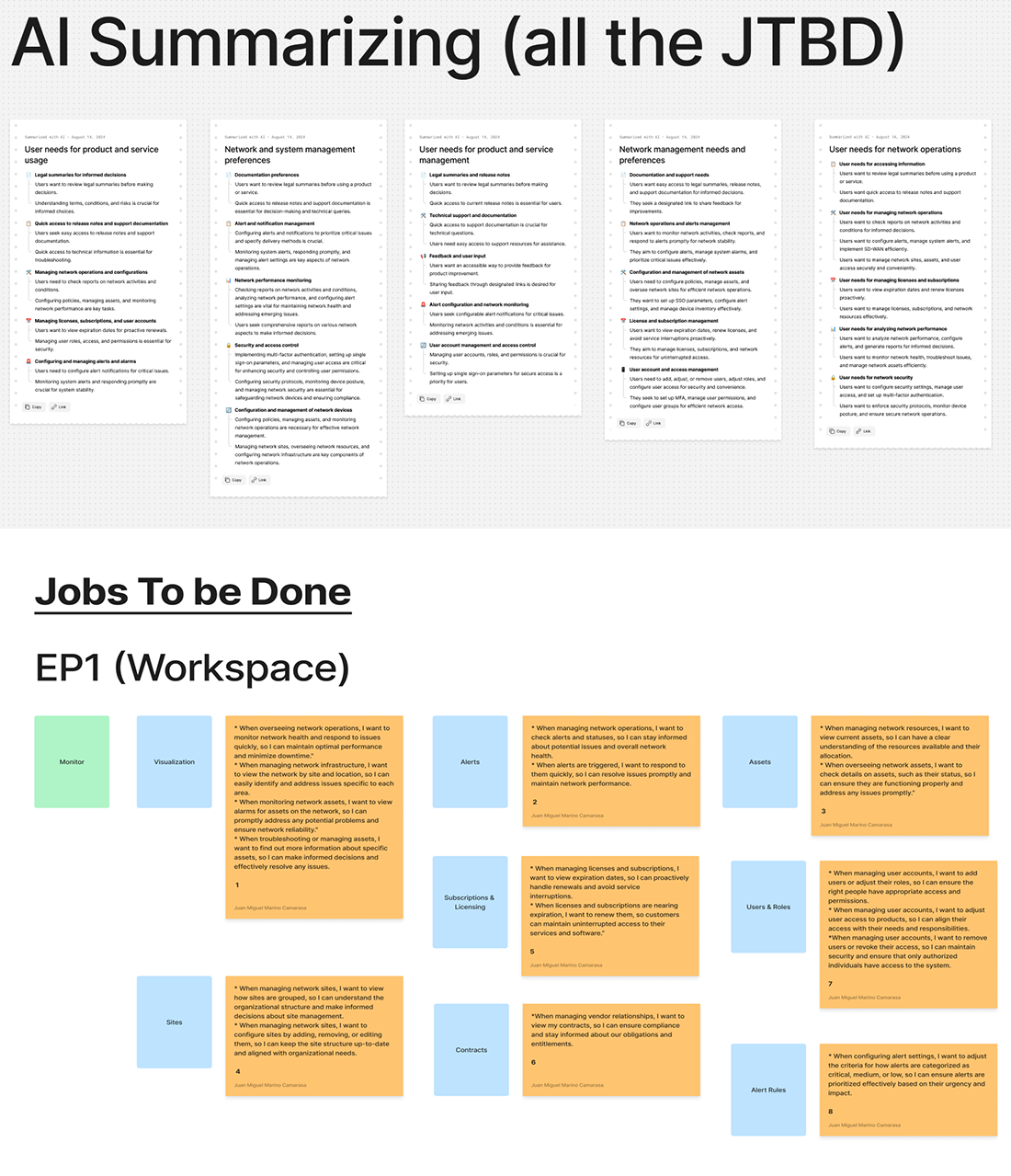
  • Extensive workshopping of jobs to be done

Design's Role in Business Growth

Design became a revenue driver. By reducing time-to-value and improving user satisfaction, we enabled faster enterprise adoption and reduced churn. Design metrics directly tied to ARR and customer retention.

Design System as Platform Backbone

With 40+ engineers and 8 designers working across multiple product surfaces, inconsistency was our biggest risk. The design system became our source of truth—not just for UI, but for interaction patterns, data visualization, and accessibility standards.

The team stablished a federated governance model with designated component owners, contribution guidelines, and a monthly design systems council.

Conversational & Assisted UX

Where Conversational Patterns Make Sense
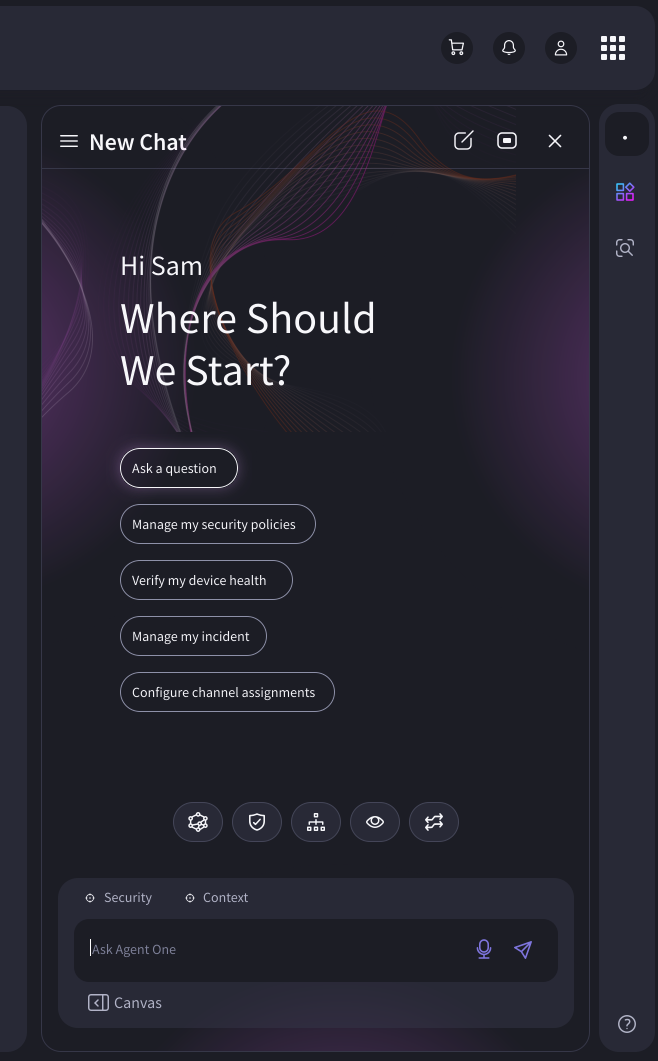
Not everything needs chat. We used conversational UI for: troubleshooting workflows, configuration assistants, and natural language queries. But for bulk operations, data tables remained superior.

Reducing Friction in Enterprise Workflows
Operators could ask "Show me all devices with high CPU in the last hour" instead of navigating 5 screens. The system interpreted intent, queried the right data, and presented results in the most appropriate format.

Process and Planning

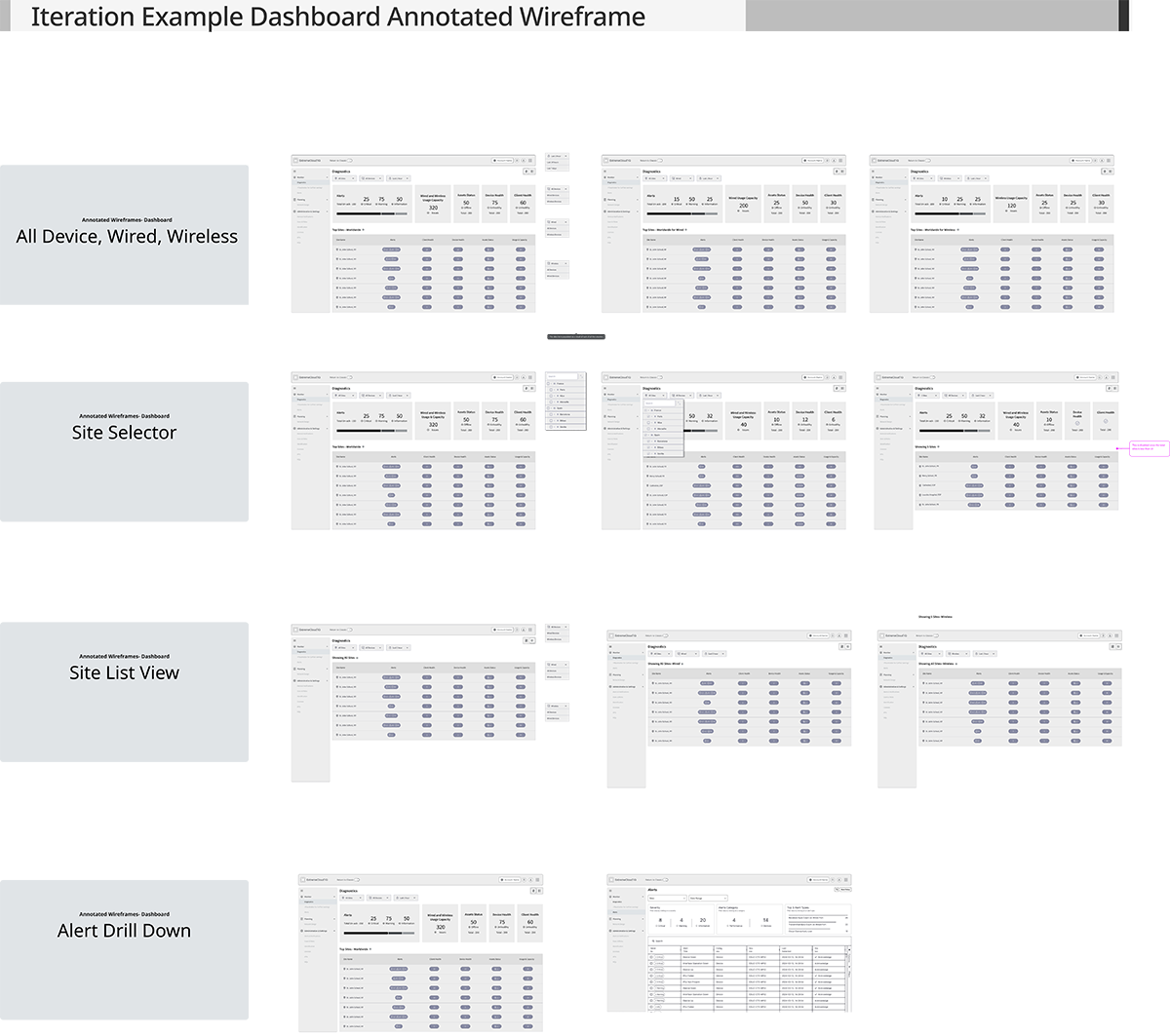
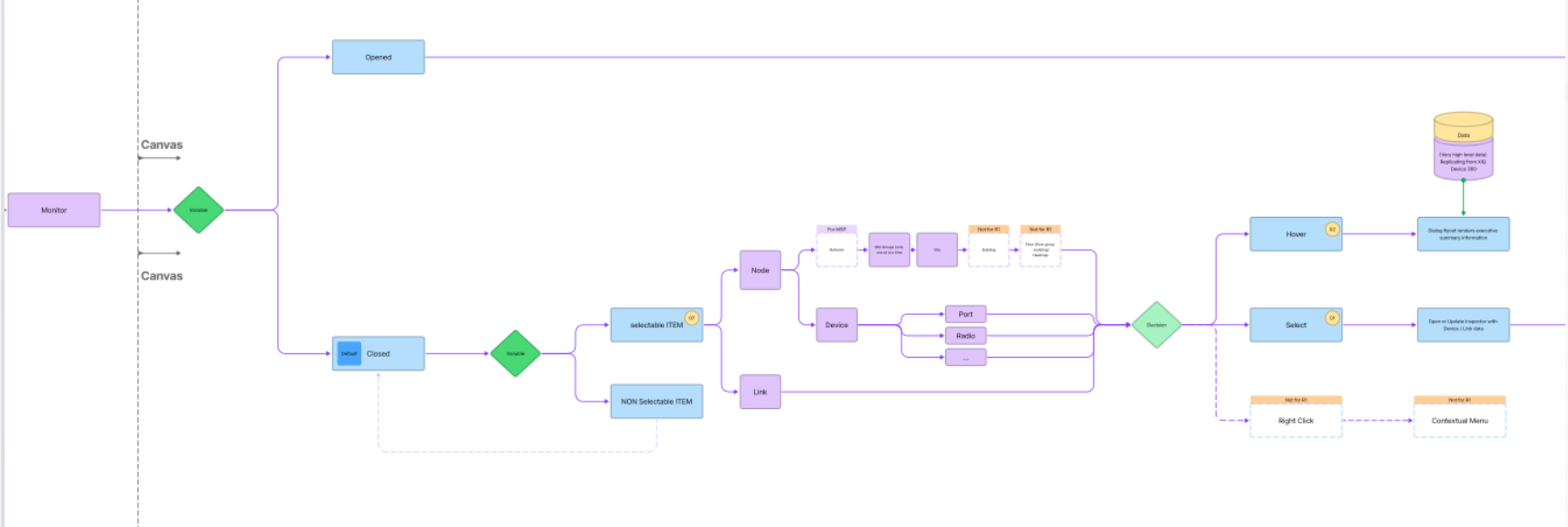
Personas, JTBD, User Journeys / Research, flows and prototyping evolved into low-fidelity wireframes. Next steps involved collaborating with Product Owners and Tech Leads to estimate agile epics.


User Testing

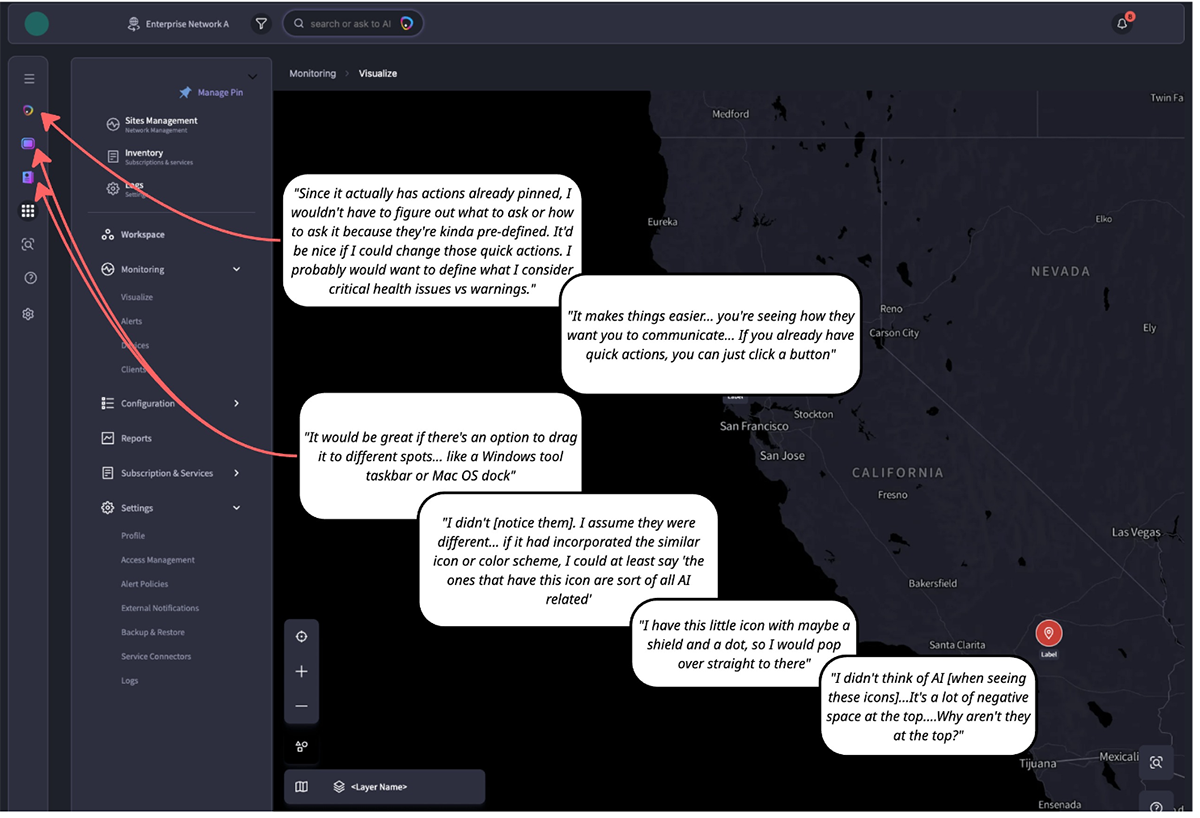
Feedback was mixed, as was success. While a couple of participants made it to the Devices page, several identified other routes they would take to find the device. All participants mentioned they would think to utilize the "Search" at the top of the interface if they had the device name.

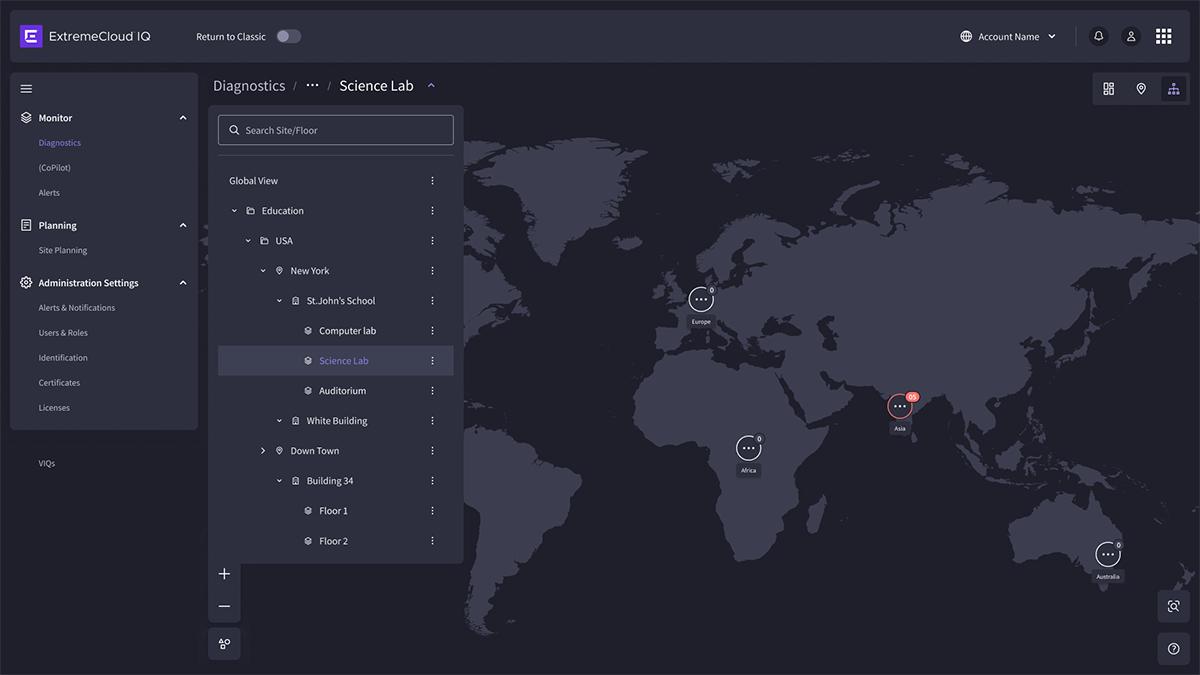
While the filters and the various categories were well received, it was recommended to provide more context around the filter categories. Status, Severity, and Category are terms that have different meanings depending on organizational context, so it is important that our definitions are clear.

Outcome

After 5 years of evolution for the creation of Extreme Platform One, the company has invested $30 million dollars to create and continually innovate a global, world-class SaaS.

Extreme Networks has since become a $2.3B enterprise networking company with 50,000+ customers globally.

Evolution

For the past 5 years, my role included updating and researching the design evolution per user testing feedback, best practices, AI inclusion, customer focus groups, Pendo results and A/B testing.